

Corinne Bot, Polyglot Group’s CEO Attends French Presidential Dinner in Sydney
François Hollande made his first state visit to Australia on the 18th and 19th of November 2014. During a dinner at the Aria Restaurant in Sydney, the President, accompanied by several ministers including Laurent Fabius, the Minister of Foreign Affairs, met a small group of 20 French Economic actors and Influential Entrepreneurs in Australia, as… Read more »

Polyglot Group Discusses Australia – German Trade with Dr Angela Merkel
The German-Australian Chamber of Industry and Commerce (GACCI) hosted a Business Reception in honor of H.E. Dr Angela Merkel on the last day of her visit to Australia and New Zealand. Her program in Sydney followed the G20 Leadership Summit in Brisbane. As premium members of the GACCI, Corinne Bot, Polyglot’s CEO, Kerstin Genau, Polyglot’s… Read more »

Major Step Forward in the Bilateral Relationship Between Australia & China
With the G20 now behind us, two pieces of news about trade and investment between Australia and China are still widely being discussed in the media. Firstly, Australian Prime Minister Tony Abbott and Chinese President Xi Jinping finally announced the conclusion of negotiation for the historic China-Australia Free Trade Agreement. With many tariffs and restrictions… Read more »

Is It Worthwhile Investing in Australia? Our Answer is YES!
Besides the famous beaches, the great weather and the relaxed lifestyle, Australia is also an attractive location for Foreign Direct Investment (FDI) and for companies expanding their services and product offerings to the “Land Down Under”. The Australian Trade Commission (Austrade) has recently released a report, highlighting Australia’s attractiveness for FDI. According to Austrade, the… Read more »

Australia Is One Of The Top 10 Most Business Friendly Countries In The World
According to a joint survey between the World Bank and International Finance Corporation, Australia remains one of the world’s most business-friendly countries. Overall, Australia is ranked 10th in the world in comparison to larger countries with a higher density of population. The quantitative indicators stated from the Doing Business report include starting a business, dealing… Read more »

Polyglot Group Becomes a Member of the Australian Energy Storage Council
The Australian Energy Storage Council (ESC) is a national member based not-for-profit organisation and is governed by a volunteer board. It has a critical role in creating industry standards and encouraging industry best practice for the energy storage sector. Energy storage has become a determinant for renewable energy and the way we produce and purchase… Read more »

Happy International Women’s Day 2015!
This year’s International Women’s Day (8th of March) was themed ‘Make It Happen’ as reminders for the public to continue creating greater awareness of women’s equality. Polyglot supports the growth of women in businesses with our founder, Corinne Bot winning the NSW Telstra Women’s Business awards in 2010! As quoted by the Workplace Gender Equality… Read more »

Shanghai Free Trade Zone and Australia
The Shanghai Free Trade Zone (SFTZ), was launched by the Chinese government in 2013. It combines four existing zones under a special administration of Customs. It has also been recognised as a symbol of the need for change under China’s new leadership. China already has a few other trade zones that apply preferential policies. However,… Read more »

Polyglot is Now A Proud Sponsor of the China Chamber of Commerce in Australia
Polyglot is proud to announce our landmark sponsorship with the China Chamber of Commerce in Australia (CCCA) starting from March 2015. CCCA is a non-profit organisation that brings together Chinese enterprises in Australia. Founded in 2006, CCCA is based in Sydney and has branches in Sydney, Melbourne, Perth and Brisbane. It has more than 250… Read more »

The 2014 Australia-China Trade Report Launched in NSW
The Australia China Business Council (ACBC) released The 2014 Australia-China Trade Report last week in NSW. As a proud member of ACBC, the Chinese Desk of Polyglot attended the launch event. The report develops a close analysis of the impact of trade between the two countries. This is also the only report of its… Read more »

United Kingdom
The union of England,
Scotland, Wales, and
North Ireland
Interested in doing business in the UK?
Here’s what you need to know about the
business climate, laws and regulations,
culture, and customs in the United Kingdom.
Country Snapshot

Official Language
British English

Currency
British Pound Sterling (GBP)

Economy
5th in the world

World Zone
Europe

Capital
London
- Key Facts & Figures
Location
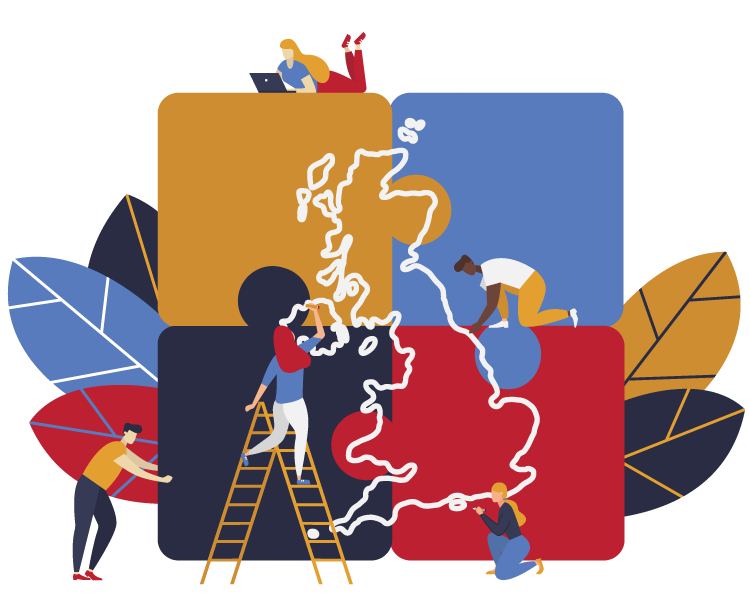
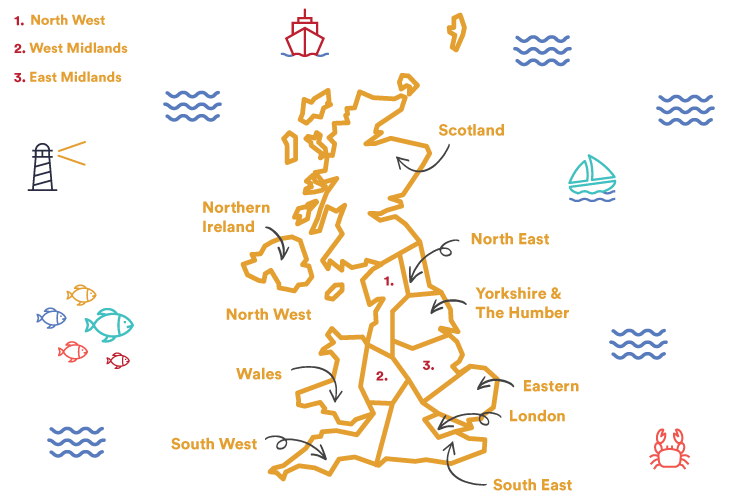
Located off the north-western coast of mainland Europe, the United Kingdom includes the entire island of Great Britain, containing England, Wales and Scotland, as well as a northern portion of the island of Ireland.
The UK only has one land border with the Republic of Ireland and is otherwise surrounded by the North Sea, Irish Sea, English Channel and Atlantic Ocean. Although not necessarily among the largest countries in the world, it is among the largest islands, ranking 8th in the world.
Population
The UK’s population is approximately 67.2 million people as of 2020. Growth has slowed in past years, driven largely by migration to and from the UK, something that has remained constant since 2016. The structure of the population is shifting more towards people living longer and having fewer children, as well as an increase in cohabiting families across multiple generations.
The UK ranks as the 9th wealthiest nation in terms of median wealth per capita, at roughly $97,169 per adult. This wealth is increasingly present in the population aged in their 60s.
- Economy
Although the British economy has faced some challenges since the 2016 Brexit referendum, it maintains a high position in international rankings, as the 5th largest economy in the world.
There is still some uncertainty as to how and when the UK will exit the European Union. This has caused a significant impact on business investment, with negative growth rates in 2019. This trend is expected to continue until all Brexit-related uncertainty is resolved. Consumer spending will continue to drive the economy, as it is predicted to maintain modest growth at 1.4% in 2019, 1.3% in 2020 and a 2.0% trend rate in the long-term.
Trade
The UK is dependent on imports for most of its metals, raw materials and food. This has encouraged the government to support free and unrestricted trade with its trading partners and memberships with international trade organisations. This, however, is set to change with the finalisation of a Brexit deal, in which the country will need to renegotiate many of its trade deals. The UK plans to take advantage of this opportunity to establish more favourable terms with its international partners.
Although the UK may experience a trade deficit, it has been able to offset the imbalance with foreign investments. The UK is the second-largest investment destination in the world.
Top Imports & Exports
Most of the UK’s largest trading partners are countries within the European Union. The United States and China are also significant partners, together forming nearly 15% of both the UK’s export and import values. The export value in 2017 was $395 billion, while imports came in at $617 billion. The UK is ranked as the 10th largest export economy in the world and the 11th most complex economy according to the Economic Complexity Index.
The country’s main imports and exports are largely the same, consisting of cars, packaged medication, crude petroleum, refined petroleum and gold. The UK does not have an abundance of natural resources, and instead trades in the sphere of manufactured products, importing the raw materials required for production.
Free Trade Agreements
Without any concrete decisions made towards Brexit, it is difficult to say exactly how the trade agreements between the UK and the European Union will unfold. For the moment, the UK has signed several trade agreements in preparation for when the country leaves the EU.
These agreements include the Andean countries, CARIFORUM trade bloc, Central America, the Eastern and Southern Africa trade bloc, the Southern Africa Customs Union and Mozambique trade bloc, as well as a few independent countries.
Additionally, the UK has signed mutual recognition agreements with Australia, New Zealand and the United States. These agreements state that the countries involved recognise each other’s conformity assessments in terms of performance standards.
One of their most recent agreements is The Australia-United Kingdom Free Trade Agreement signed 17 December 2021, this agreement will see an elimination of 99% of tariffs on exports between the two countries, as well as other benefits.
- Legislation
Expanding to the UK? Here is a breakdown of the key things to keep in mind.
Company Setup
The UK presents numerous business opportunities for expanding multinational companies. Setting up a business in the UK can be done through various methods, such as setting up a standalone UK limited company, opening a Partnership company or Subsidiary, or registering a branch / UK establishment.
Employment
All employees in the UK have an employment contract with their employer. A contract is an agreement that sets out an employee’s employment conditions, salary, rights, responsibilities and duties. These are called the ‘terms’ of the contract. Other information regarding the probationary period, benefits and commissions are often included.
Employees and employers must stick to a contract until it ends (for example, by an employer or employee giving notice or an employee being dismissed) or until the terms are changed (usually by agreement between the employee and employer).
Employees have several rights including statutory sick, parental leave and redundancy pay. The typical working day hours are from 9 am to 5 pm.
Immigration
The Tier 2 (General) visa is the most commonly-used visa to employ skilled foreign workers from outside of the EU in the UK. This visa requires the applicant to be offered a recognised, skilled job in the UK by a licensed sponsor. Until the UK leaves the EU, it will continue to have access to its vast talent pool. These regulations will change once a decision about Brexit has been made.
Payroll
Payroll in the UK operates under a PAYE (Pay As You Earn) system that allows the HM Revenue and Customs (i.e. the national tax authority) to collect income tax and national insurance from employment. Your company’s payroll will need to take this into account when paying your employees. The rate of employer national insurance is 13.8% and is applied to all earnings over 702 pounds per month.
The payroll taxes paid by companies in the UK are equal to the total amount of PAYE, employer and employee national insurance and student loans.
Tax
In the UK, the financial year ends on 5th April, but your tax filing deadline could differ depending on your accounting period. The deadline is typically 9 months and 1 day after the end of your accounting period. The main thing to remember is that you need to pay your corporation tax prior to filing for a company tax return.
The UK also has a value-added tax (VAT) that is applied to the final consumption of goods and services. This tax applies to most business-related goods and services and is typically taxed at a rate of 20%. VAT returns must be submitted on a quarterly basis.



© The Polyglot Group 2026 - Since 1995//Privacy & Cookies Policy//Work With Us

By 3228Digital. Website Design Geelong